
"the endless joy and wonder of the natural world that can be analysed, categorised and studied by AI but never replaced by it"
Back in the summer of 2025 in London, I hosted a networking event for UK based entrepreneurs who had previously lived in Asia working in the tech, climate and impact industries on what turned out to be the hottest day of the year. Ex East had been running for a couple of years at that point and brought together people passionate about using technology and business acumen to have a positive impact on the planet and help fight climate change.
Having spent 20 years living and working in Bangkok, I had experienced sweltering heat, occasional drought, extreme air pollution and devastating floods first hand. Everything that people across the west are becoming more acquainted with in 2026. The most successful business I built there, the Asia Property Awards, was not entirely absent of blame for encouraging non-stop real estate development across south east Asia and beyond. A lot of it served a genuine need for rapidly developing economies. A lot of it, particularly in the luxury condo segments, didn't and was frequently utilised as unoccupied investment property.
After selling the business, I was determined to put my good fortune to more positive use and began investing in impact and climate startups and started Tuu, a sustainability data verification business for hotels in Asia.
I digress though. Back to July 1st 2025, stood in a bakingly hot room above a pub in Bloomsbury with 30 other like minded entrepreneurs listening to a presentation on AI and impact from author and filmmaker Siok Siok Tan. Everybody had been primed for short filmed interviews afterwards about their hopes and fears about the coming AI age and to bring an object that represented their view.
Like most people at that point my AI usage was mostly as a glorified search engine. I certainly didn't fear it, but I was cognisant of the unease people felt about its potential impact on the workforce and labour market. I had given some thought to what an enjoyable, AI-proof job might look like and near the top of the list was a wildlife safari guide. It was also a profession my son wanted to go into, and indeed six months later he began his professional guiding qualifications at Eco Training in South Africa.
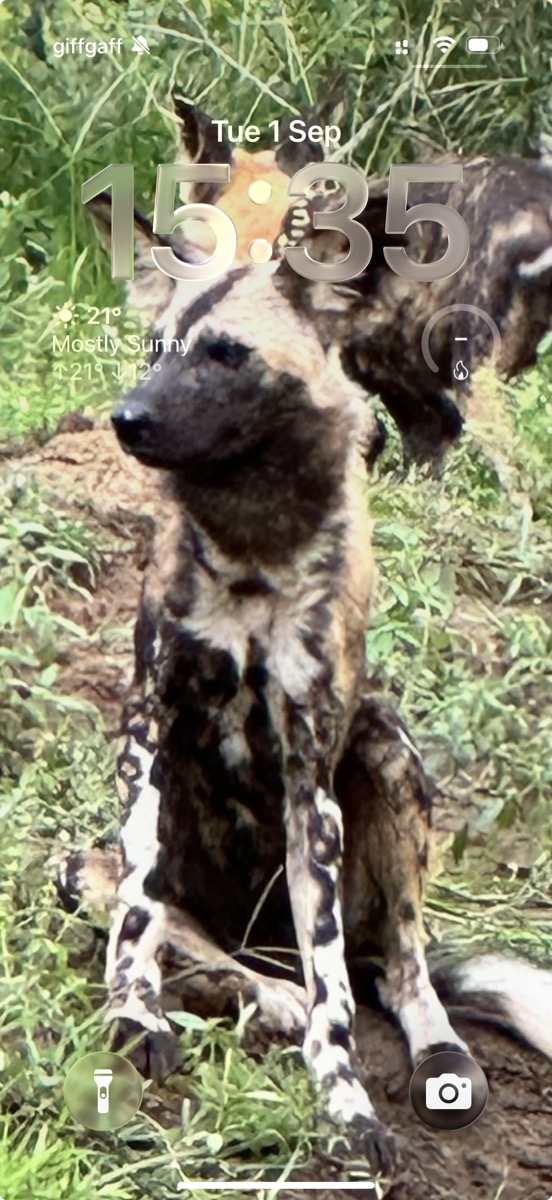
My emblematic object was a picture of an African wild dog on my phone's screensaver taken in Hluhluwe-iMfolozi Park near Durban. That, for me, symbolised the endless joy and wonder of the natural world that can be analysed, categorised and studied by AI but never replaced by it.
People will always want to see animals in the wild and people will always need professionals to safely guide them whilst doing so. However politics, like technology, is always looming on the horizon and the reality of seeing something as straightforwardly awe-inspiring as a pack of wild dogs, a herd of elephants or a pride of lions is always more complicated than it appears.
In this case, we could go all the way back to the founding of a lot of parks as colonial private hunting areas with locals forcibly relocated first. Decades after independence, locals work in, manage and visit parks and reserves in ever growing numbers and are as passionate about conservation and wildlife preservation as anyone else, but the tensions around land, access and ownership have simmered along and never quite gone away.
I was struck by an interview on Mongabay's podcast a few years ago with a Tanzanian wildlife activist about the controversy around shooting safaris vs photographic safaris and which was more beneficial for local income. She said something like "would Europeans be happy with Africans coming to their country and telling them how they were allowed to manage their wolves and bears?"
"would Europeans be happy with Africans coming to their country and telling them how they were allowed to manage their wolves and bears?"
She certainly had a point, and this year I began to see the opportunity and utility of adapting the Tuu model for the continent, taking the politics of land alongside population growth and climate change into consideration.
Those thoughts were sharpened by reading How Africa Works by Joe Studwell published in February. Studwell, appropriately enough for my background, shot to fame with his 2013 How Asia Works and he sees lots of parallels between the two continents.
He is very positive on the economic potential in the years ahead driven primarily by Africa catching up to the demographic milestones achieved by Asia decades ago and by 2030 is projected to reach the population density that Asia had in 1960, which is what Studwell sees as an inflection point for an economic boom for the continent.
More people and the associated dramatic growth in agricultural production will mean a concentrated demand for resources, more megafarms, greater urbanisation and ultimately greater pressure on the wildlife industry for resources and land.
One related point he is very explicit about is the lack of good data.
"The Intergovernmental Panel on Climate Change describes the risk in Africa as the least certain of any part of the world because of the paucity of historical data. Without data, it is impossible to know what normal temperature and rainfall levels are in many areas of the continent. That said some regions are clearly under threat already," he says.
"Without data, it is impossible to know what normal temperature and rainfall levels are in many areas of the continent."
That's exactly the problem Lodgemark wants to help solve. More data equals better planning, more growth, more learning opportunities for people in the same business, more community impact and more opportunities to protect wildlife and share resources. Africa is around 4% of global emissions with about 18% of the population but it will nevertheless bear the brunt of climate change, unless everyone understands more and has more data. A shared data system to adapt and survive.
So why Lodgemark? On a selfish level to help ensure that my son's AI-proof career path and his chosen passion are viable for years to come and to try and do my small part in using something that's still sorely lacking, good data, to help mitigate two things that are definitely coming - more climate change and more people.
The demographic shift will also create huge opportunities for the continent and its people and will make it the most exciting place in the world to live and work in the decades to come. Africa already has a precious and unique resource in its safari industry and seeing an endangered species like wild dogs is an amazing and rare gift, so anything that remotely increases the chance of that happening for more people and helps the industry survive and thrive is worth the effort.
← Back to Field Notes